
- Your cart is empty
- Continue Shopping

BlogHome DecorHome Styling
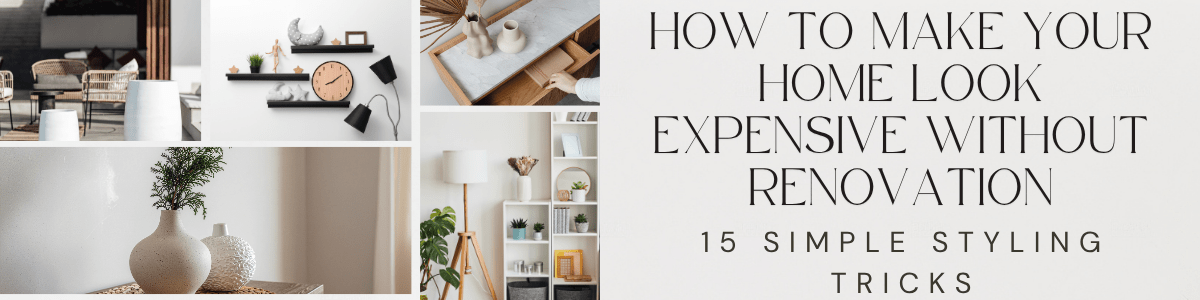
How to Make Your Home Look Expensive Without Renovation: 15 Simple Styling Tricks
-
By decorina
- Posted on
You don’t need a major renovation, expensive furniture or a designer budget to make your home look expensive.
In fact, some of the biggest changes come from things that are surprisingly simple: removing clutter, improving lighting, choosing the right colours, styling surfaces properly and adding a few well-chosen decor pieces.
An expensive-looking home is usually not about how much everything costs. It is about how thoughtfully everything comes together.
Whether you live in an apartment, an independent house or a rented home, these 15 home styling ideas can help you create a polished, sophisticated look without renovation.
What Makes a Home Look Expensive?
Before buying anything new, understand what actually creates a luxurious-looking interior.
High-end homes usually have a few things in common:
- A cohesive colour palette
- Less visual clutter
- Good lighting
- Well-proportioned furniture
- Layered textures
- Carefully selected decor
- Clear focal points
- Accessories that look intentional rather than randomly placed
The good news is that most of these can be achieved without changing your flooring, walls, kitchen or furniture.
Let’s look at the easiest ways to do it.
1. Start by Decluttering Your Home
The first step to making your home look expensive is not buying more decor.
It is removing what you don’t need.
Too many objects on a coffee table, open shelves, dining table or console can make even expensive furniture look ordinary.
Start by removing:
- Unused decorative objects
- Excess cushions
- Random items lying on tables
- Too many small accessories
- Visible wires and unnecessary packaging
- Items that don’t belong in the room
Then put back only the pieces that are useful, beautiful or meaningful.
The simple rule
Decorate less, but decorate better.
A room with five thoughtfully selected pieces will often look more sophisticated than a room filled with fifteen unrelated accessories.
2. Choose a Simple Colour Palette
One of the easiest ways to create a premium-looking home is to make your colours work together.
Instead of using many unrelated colours, choose a base palette and repeat it throughout the room.
For example:
Warm neutral + wood + black + small metallic accents
or
White + beige + natural wood + muted green
or
Cream + brown + gold accents
You don’t have to make your entire home monochromatic. The goal is simply to avoid too many competing colours.
For Indian homes, warm neutrals, earthy shades, wood tones and subtle metallic accents can work particularly well with existing furniture and flooring.
3. Upgrade Your Lighting
Lighting can completely change how a room looks and feels.
A room with beautiful furniture can still look flat when it relies entirely on one bright ceiling light.
Instead, create layers of light.
Try combining:
- Main ceiling lighting
- Table lamps
- Floor lamps
- Accent lighting
- Warm decorative lights
Use warm-toned lighting where possible to create a softer and more inviting atmosphere.
If you don’t want to replace your existing fixtures, even adding a stylish lamp or decorative light source can make a noticeable difference.
Think atmosphere, not just brightness.
4. Make Your Curtains Look More Expensive
Your curtains occupy a surprisingly large visual area, so small changes can have a big effect.
Instead of hanging curtains exactly at the top of the window, consider mounting them higher to create the impression of taller windows.
Where possible:
- Let curtains fall close to the floor
- Choose a fuller curtain width
- Avoid very short curtains
- Keep the colour coordinated with the room
- Prefer simple, timeless fabrics over overly busy patterns
This is one of the easiest ways to make a room feel taller and more finished without changing its architecture.
5. Create One Strong Focal Point
Luxury interiors rarely try to make every object the star.
Instead, they usually have a focal point.
Your focal point could be:
- A statement wall
- A large artwork
- A sculptural decor piece
- A beautiful mirror
- A distinctive coffee table arrangement
- A striking vase
- A statement tray
Choose one hero element and let the surrounding decor support it.
For example, rather than placing six small showpieces on a console, choose one larger sculptural piece and complement it with two smaller accessories.
This creates visual hierarchy and makes the arrangement feel intentional.
6. Style Your Coffee Table Like a Designer
Your coffee table is one of the first surfaces people notice in a living room.
Instead of placing objects randomly, create a small composition.
A simple formula is:
Tray + decorative object + book + greenery
A decorative tray is particularly useful because it visually groups multiple objects together and prevents the table from looking scattered.
You can also use a decorative tray to combine a vase, candle and small showpiece into one coordinated arrangement.
HomeDecorina has previously covered this styling technique in detail because trays can create structure and focal points on coffee tables, consoles and dining tables.
7. Add a Decorative Tray to Your Console or Dining Table
A tray isn’t only for serving.
It can act as the foundation of a decor arrangement.
For example, on a console:
Decorative tray + vase + small sculpture
On a dining table:
Tray + vase + small decorative accents
On a kitchen counter:
Tray + jars + small plant
The tray gives these objects a visual boundary, making the entire arrangement look more organised.
If you’re looking for a statement piece, you can explore HomeDecorina’s decorative tray collection for wooden and artistic tray designs.
8. Add Greenery
Plants bring life into a room and can soften hard furniture lines.
You don’t need to turn your home into a jungle.
One well-positioned plant can be enough.
Try placing greenery:
- Beside the sofa
- Near a window
- On a console
- On a side table
- On an open shelf
- In an unused corner
For smaller spaces, a decorative planter with a compact plant can add colour and texture without taking up much floor space.
If you’re using artificial greenery, choose realistic-looking pieces and keep them dust-free. A dusty faux plant can have the opposite effect.
9. Use Texture Instead of More Colour
A room can look expensive even when its colour palette is simple.
The secret is texture.
Combine materials such as:
- Wood
- Ceramic
- Glass
- Metal
- Linen
- Cotton
- Velvet
- Natural fibres
For example, imagine a beige sofa with a wooden coffee table, ceramic vase, textured cushions and a metallic accent.
The colours are simple, but the different textures make the room visually interesting.
Luxury often comes from layering, not excess.
10. Use Metallic Accents Carefully
Gold, brass and other metallic finishes can add richness to an interior.
But there is an important rule:
Don’t turn the entire room into gold.
Use metallic finishes as accents.
For example:
- Gold frame
- Brass lamp
- Metallic sculpture
- Gold-accented vase
- Decorative tray with subtle metallic detailing
A few repeated metallic touches can make a room feel cohesive and refined.
11. Give Your Walls More Personality
Empty walls can make a room feel unfinished.
But covering every wall with artwork isn’t the answer either.
Instead, choose one area to create a visual statement.
You could use:
- One large artwork
- A carefully arranged gallery wall
- A statement wall clock
- Decorative wall art
- A mirror
- Sculptural wall decor
The key is proportion.
A tiny piece of artwork floating on a large empty wall can look accidental. A properly sized statement piece can immediately anchor the room.
12. Follow the Rule of Three
If you’re unsure how to arrange decor, start with three objects.
For example:
Tall + medium + small
You could combine:
- Vase + sculpture + small accessory
- Lamp + artwork + plant
- Tray + vase + decorative object
The variation in height creates visual movement.
Avoid making every object exactly the same height. Different proportions make the arrangement feel more natural and professionally styled.
13. Make Your Shelves Look Curated
Open shelves can quickly become cluttered.
Instead of filling every available space, leave some empty areas.
Mix:
- Books
- Small sculptures
- Plants
- Vases
- Decorative objects
- Personal pieces
Group a few objects together and leave breathing space between them.
You can also alternate the placement of objects rather than lining everything up in a single row.
A useful shelf formula:
Books + object + greenery + empty space
Repeat variations of this rather than using the exact same arrangement on every shelf.
14. Pay Attention to Small Details
Expensive-looking interiors are often created by details people don’t immediately notice.
Look around your home for small things that make the room feel unfinished.
For example:
- Tangled charging cables
- Cluttered countertops
- Random plastic containers
- Mismatched storage
- Dusty decor
- Empty boxes
- Too many visible everyday items
Move these out of sight wherever practical.
Even simple organisation can make a room feel calmer and more premium.
This is especially useful in entryways, kitchens, living rooms and bedrooms.
15. Buy Fewer, Better-Looking Decor Pieces
This may be the most important tip of all.
You don’t need to continuously buy new decor to make your home look expensive.
Instead, choose pieces that have:
- Interesting shapes
- Good proportions
- Complementary colours
- Quality-looking finishes
- A clear purpose
- Visual character
One sculptural piece can have more impact than several generic accessories.
For example, an abstract sculpture, statement vase or distinctive tray can become the focal point of a console or coffee table.
HomeDecorina’s collection includes sculptural vases, figurines, trays, wall decor and other decorative accents that can be used to create these small styling moments.
How to Make a Living Room Look Expensive Without Renovation
If you want to start with just one room, start with the living room.
Try this simple combination:
Step 1: Remove clutter
Clear unnecessary items from the coffee table and TV unit.
Step 2: Improve lighting
Add a floor or table lamp if the room feels flat at night.
Step 3: Create a coffee table arrangement
Use a decorative tray with two or three carefully selected objects.
Step 4: Add greenery
Place one plant or decorative planter near the seating area.
Step 5: Add one statement piece
Choose a sculpture, vase, artwork or other focal-point accessory.
Step 6: Coordinate colours
Make sure your cushions, curtains, rugs and accessories don’t fight with one another.
You can make a surprisingly noticeable difference without replacing your sofa or changing the flooring.
How to Make a Small Home Look More Expensive
Small homes benefit even more from thoughtful styling.
Avoid filling every corner.
Instead:
- Keep surfaces relatively clear
- Use mirrors strategically
- Choose appropriately sized furniture
- Use lighter colours where suitable
- Add vertical elements
- Keep decor grouped rather than scattered
- Use multifunctional accessories
- Maintain visual consistency
A small home doesn’t need more things.
It needs better visual organisation.
A ₹1,000–₹3,000 Home Styling Upgrade
You don’t necessarily need to spend a large amount to refresh a room.
Instead of buying ten inexpensive accessories, consider investing in two or three pieces that have more visual impact.
For example:
Option 1 – Coffee Table
Decorative tray + small vase + existing book
Option 2 – Console
Statement decor piece + tray + existing greenery
Option 3 – Dining Table
Decorative tray + vase + small accent pieces
The objective isn’t to spend more.
It is to make each purchase work harder.
Common Mistakes That Make a Home Look Cheap
Sometimes the easiest way to make your home look more expensive is to stop doing the things that make it look cluttered.
Too many small decor pieces
A large collection of tiny accessories can create visual noise.
Too many colours
If every item is a different colour, the room can feel disconnected.
Overdecorating
Every empty surface does not need something on it.
Ignoring scale
A tiny accessory on a huge table may disappear, while an oversized object can overwhelm a small surface.
Matching everything perfectly
Your home should feel coordinated, not like everything was purchased as one set.
Choosing trends over personality
A beautiful home should reflect the people living in it. Current design advice increasingly emphasises individuality and a collected look rather than simply filling a home with mass-produced trend pieces.
The Secret to an Expensive-Looking Home
Here’s the biggest takeaway:
You don’t need an expensive home to create an expensive-looking home.
Focus on:
Less clutter + better lighting + cohesive colours + good proportions + layered textures + intentional decor.
Before buying anything new, look around your existing home.
Move furniture.
Remove unnecessary objects.
Rearrange your shelves.
Change the position of your lighting.
Group your accessories.
Then add one or two pieces that genuinely improve the room.
Sometimes, that is all it takes.
Final Thoughts
Making your home look expensive without renovation is less about spending money and more about making thoughtful design decisions.
You don’t need to replace your furniture or completely redesign your interiors.
Start small.
Declutter one room. Improve its lighting. Create one focal point. Add some greenery. Style your coffee table. Introduce a decorative tray. Bring in texture. Then step back and look at the room as a whole.
The goal is not to make your home look like a showroom.
The goal is to make it feel intentional, balanced, comfortable and beautifully yours.
And when you’re ready to refresh your space with a few carefully selected pieces, explore HomeDecorina’s collection of home decor, trays, vases, figurines and decorative accents designed for modern Indian homes.
Small changes can create a big difference. You don’t need renovation—you need better styling.
